


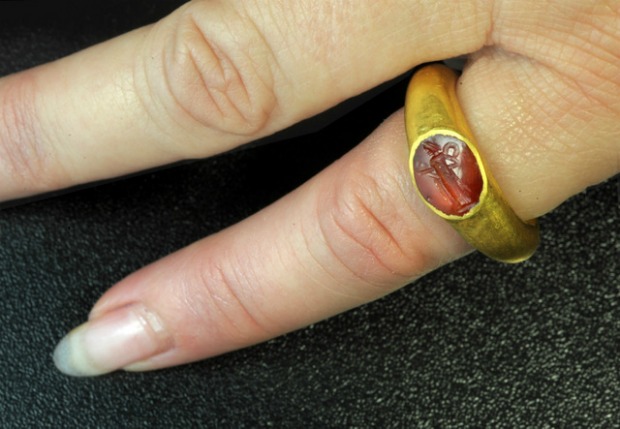
Israeli archaeologists say they’ve found a trove of gold and silver coins that date back to the Bar Kochva Revolt some 2,000 years ago.
The treasure discovered near Kiryat Gat is believed to have been stashed there by a wealthy woman.
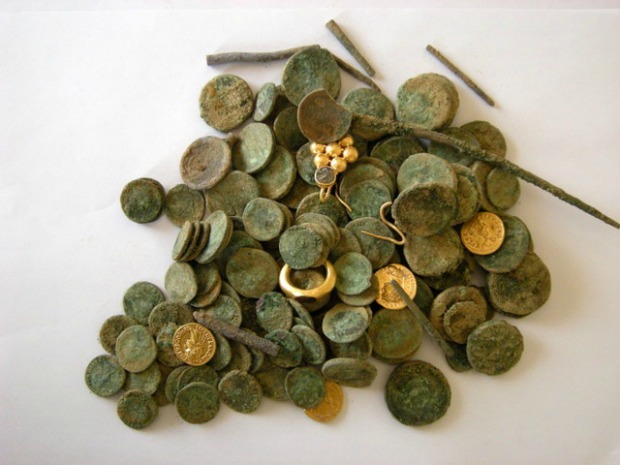
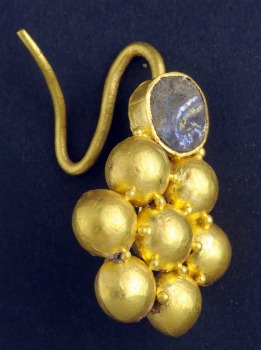
“This is probably an emergency cache that was concealed at the time of impending danger by a wealthy woman who wrapped her jewelry and money in a cloth and hid them deep in the ground prior to or during the Bar Kokhba Revolt,” said archaeologist Sa’ar Ganor of the Israel Antiquities Authority. “It is now clear that the owner of the hoard never returned to claim it.”
The trove included 140 gold and silver coins as well as gold jewelry. Scientists said the coins date to the reigns of emperors Nero, Nerva and Trajan, who ruled the Roman Empire from about A.D. 54 to 117.
The findings were dug up at an excavation site near Kiryat Gat, in the rooms of a building dating to the Roman and Byzantine period. Archaeologists are now studying the treasure at the laboratories of the Artifacts Treatment Department of the Israel Antiquities Authority in Jerusalem.
“The composition of the numismatic artifacts and their quality are consistent with treasure troves that were previously attributed to the time of the Bar Kochva Revolt,” said Ganor.
Fighting for Israel's truth
We cover what makes life in Israel so special — it's people. A non-profit organization, ISRAEL21c's team of journalists are committed to telling stories that humanize Israelis and show their positive impact on our world. You can bring these stories to life by making a donation of $6/month.